 01 / EDITORIALStories
 02 / THE SHELFLibrary
 03 / SLOW SPACEReading Room
 04 / THE JOURNALAbout
SPACES / EDITORIAL5 MIN READ
Rooms made for reading
Why the spaces we return to can become part of the stories we carry.
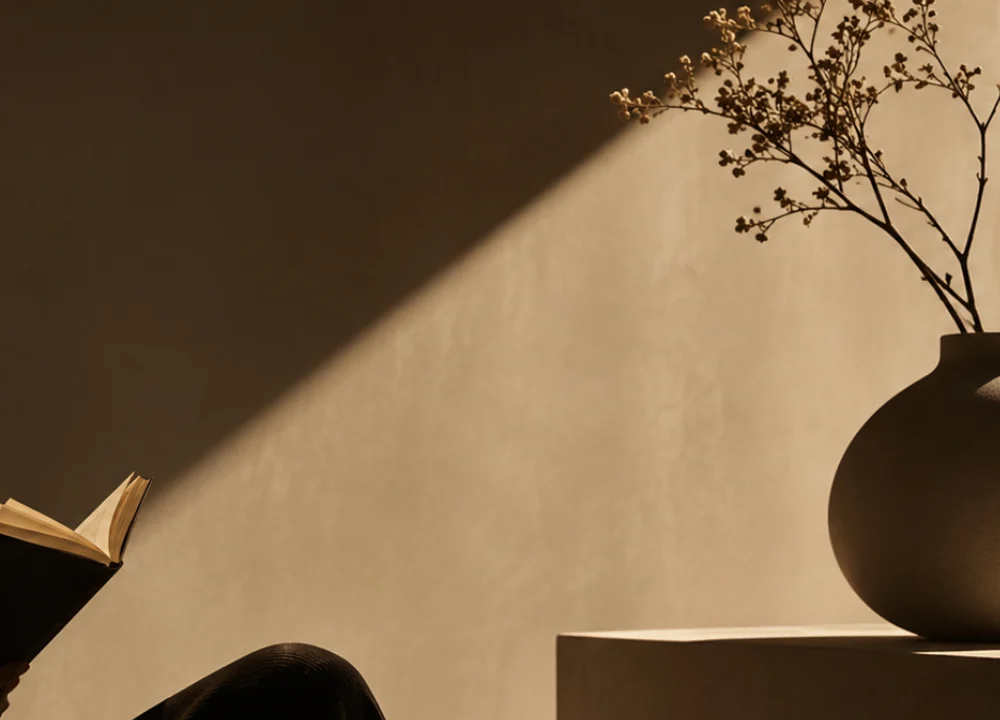
There are rooms we remember by their light, and rooms we remember by the way the world seemed to quieten when we entered them.
A room has its own pace
The best places to read do not announce themselves. They may have a comfortable chair, or a windowsill large enough for a cup, or nothing more than a patch of afternoon light. Their power lies in the permission they give us to remain.
We often think of reading as something that happens inside the head. But the body remembers the room: the texture of the fabric, the angle of a lamp, the small sounds beyond the door.
Some places teach us to stay.
Architecture for a sentence
A room can encourage a certain kind of attention. Soft edges, the warmth of wood, the comfort of knowing where to put your hands. None of these things will make a difficult book easier, but they may make it easier to stay with the difficulty.
The ideal reading space is not necessarily perfect. It simply fits the person who uses it. A kitchen table may serve as faithfully as a beautiful library.
Made of repetition
The rooms that matter most are often built through repetition. A place becomes ours because we have sat there many times, in different moods, with different books, and brought each of those versions of ourselves along.
Perhaps the lasting beauty of a reading room is this: it is not a backdrop. Over time, it becomes part of the story.
YOU’VE REACHED THE LAST LINE.Explore more stories